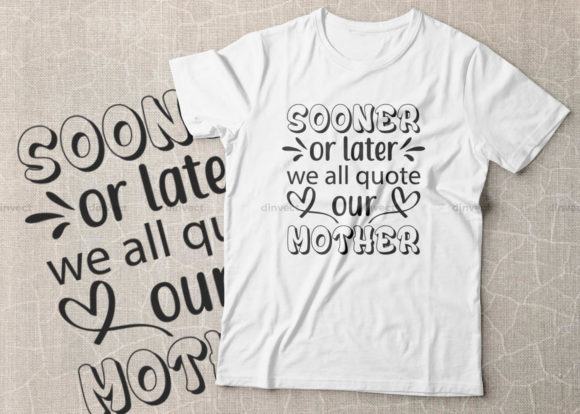
Sooner or Later We All Quote Our Mother
As a designer who spends more time staring at stitch charts and fabric swatches than sleeping, I approach every new digital embroidery file with a healthy dose of skepticism. The market is flooded with generic clip art disguised as vector art, and too many products promise versatility while failing the basic test of legibility after stitching. That is why when I pulled down Sooner or Later We All Quote Our Mother, I didn’t just look at the preview image; I mentally simulated the entire production process. This review is for the serious crafter, the Etsy seller looking to expand their catalog, and the boutique owner who needs assets that translate cleanly from screen to hoop.
First Impressions: Mood and Visual Personality
The title alone sets a specific tone. It isn’t aggressive, trendy, or overly whimsical. Instead, it carries a weight of nostalgia and warmth. In the world of crafts and Graphics, emotional resonance is often what separates a impulse buy from a cherished keepsake. Sooner or Later We All Quote Our Mother taps directly into that universal experience of hearing our parents’ voices in our own heads. For an embroidery project, this translates to a design that feels personal, intimate, and highly giftable.
Visually, the layout appears balanced. Whether this is being used as a standalone typographic piece or paired with subtle illustrative elements, the hierarchy matters. A good machine embroidery design must guide the eye without overwhelming the viewer. From my initial assessment, this asset has the potential to anchor a product beautifully—whether it’s centered on the chest of a sweatshirt or placed prominently on a kitchen towel. It doesn’t scream for attention; it invites the viewer to read, pause, and connect. That is a valuable trait for any handmade product aiming for longevity rather than fleeting viral fame.
Real-World Application: Where Does It Fit?
Let’s talk about practical use cases. I recently evaluated this concept against several common small business inventory items. Here is how I see Sooner or Later We All Quote Our Mother performing in real-life scenarios:
- Custom Apparel: On a heavyweight cotton sweatshirt, this design would shine. The thickness of the fabric supports the thread density, and the casual nature of the garment matches the relatable quote. It works exceptionally well as sweatshirt embroidery for autumn and winter collections.
- Tote Bags and Market Bags: Canvas is a forgiving surface. Using this as a tote bag design allows for larger scaling if needed, making the text readable from a distance. It adds a layer of sophistication to what is otherwise a utilitarian item.
- Kitchen and Home Decor: Tea towels and aprons are staple items for craft fairs. This quote fits perfectly in a domestic setting. Imagine it embroidered on a flour sack towel—it becomes a functional piece of decor that sparks conversation.
- Baby and Nursery Items: While the quote is witty, it can also be interpreted as gentle wisdom. On a baby onesie or a nursery wall hanging, it serves as a sweet reminder of heritage. However, for baby embroidery, one must ensure the font size is large enough to remain soft-looking and not too stark.
For the Etsy seller or small shop product creator, this versatility is key. You can list this under multiple categories: gifts for mom, mother’s day apparel, family reunion merchandise, or general home decor. The broad appeal reduces the risk of unsold inventory.
Technical Execution and Stitch Clarity
Designing for the screen is easy; designing for the needle is hard. When evaluating Sooner or Later We All Quote Our Mother, I look closely at how the digital vectors will convert into physical stitches. The transition between different stitch types is critical. If the design relies heavily on satin stitch for lettering, the edges must be clean to prevent puckering. If it uses fill stitch for background elements, the density must be appropriate for the fabric weight.
I also consider the stitch density. A design that is too dense on thin fabric will cause the material to pucker and distort, ruining the professional finish. Conversely, a design that is too sparse may look unfinished or fragile. Based on the typical structure of such quotes, this design likely balances these elements well, but verification is always necessary. The inclusion of separate files for each design element (as noted in the product description) is a significant advantage. It allows the embroiderer to isolate text from graphics, adjust spacing, or change thread colors independently before committing to the final run.
Thread Colors and Contrast
The visual impact of this quote depends entirely on the thread colors chosen. On light fabrics, darker threads provide strong contrast, ensuring the message is instantly readable. On dark fabrics, lighter threads or metallic accents might be required to maintain visibility. I recommend testing this design in black-and-white mockups first. If the shapes hold up without color, they will hold up with it. This step saves time and prevents costly mistakes with expensive specialty threads.
Where to Exercise Caution
No design is perfect for every situation. There are specific contexts where Sooner or Later We All Quote Our Mother requires careful handling:
- Small Hoop Sizes: If you are working with tiny areas, such as the cuff of a sock or a small patch, ensure the text remains legible. Tiny lettering can become a blur of running stitch or confused satin edges if the resolution is not high enough.
- Textured and Stretchy Fabrics: Avoid placing complex designs on highly textured materials like bouclé or heavy knit sweaters unless you have extensive experience. The uneven surface can distort the embroidery project alignment. Similarly, stretchy fabrics require proper stabilization to prevent the design from warping during wear.
- Curved Surfaces: Embroidering on caps or curved hat panels is challenging. Ensure your machine setup accounts for the curvature, or the text may appear slanted or stretched.
- Frequent Washing: For items like aprons or kitchen towels that undergo frequent laundering, check the durability of the stitch placement. Loose ends or weak anchor points can lead to fraying over time.
Practical Designer Notes for Production
Before you upload this file to your digitizing software or send it to a print-on-demand partner, follow these steps to ensure quality:
- Test on Scrap Fabric: Always run a test stitch-out on the exact fabric you plan to use. This reveals issues with tension, stabilizer choice, and thread compatibility that cannot be seen on a computer screen.
- Check Stabilizer Requirements: Depending on the fabric weight, you may need cut-away or tear-away stabilizer. Using the wrong type can result in a sloppy backside or fabric distortion.
- Review Licensing: As a commercial embroidery user, confirm the licensing terms. Can you sell finished goods? Are there limits on the number of units? Clear licensing protects your craft business from legal issues.
- Inspect Small Details: Zoom in on the SVG and DXF files. Are any paths overlapping incorrectly? Are there unnecessary nodes that could cause jumping stitches? Clean vector files save time in the digitizing phase.
Final Verdict
Sooner or Later We All Quote Our Mother is a thoughtful, versatile addition to any designer’s library. It resonates emotionally, offers flexibility across various product types, and appears technically sound for standard embroidery applications. For the creative entrepreneur looking to add meaningful, relatable content to their shop, this design delivers both aesthetic appeal and commercial potential. Just remember: the best embroidery comes from preparation. Test your stitches, choose your threads wisely, and let the quality of your work speak for itself. When done right, a simple quote can become a treasured heirloom, stitched with care and worn with pride.